顯示具有 silicone 標籤的文章。 顯示所有文章

2017年12月1日 星期五

Seamless integration of 3D printing ramps up in clinical environments

The annual meeting of the Radiological Society of North America, which is being held in Chicago this week through Dec. 1, has generated a fair amount of 3D printing news. Yesterday, we reported on Stratasys’ launch of BioMimics, which provides functionally accurate 3D-printed replicas of complex anatomical structures for the purposes of surgical planning, education and medical device testing. Since then, Stratasys and Materialise have announced agreements with Philips and Siemens, respectively, that integrate 3D printing technology within hospital infrastructures.
Materialise
Image courtesy Materialise.
Minneapolis-based Stratasys has signed an agreement with Philips that includes a seamless interface across its IntelliSpace Portal 10, an advanced visualization platform used by radiologists. It allows users of Philips’ informatics and data management system to rapidly design, order and produce 3D-printed anatomical structures on demand. Philips describes it as the “first solution to feature an embedded 3D modeling application for creating and exporting 3D models intuitively into the clinical workflow.” Philips has signed a similar agreement with 3D Systems. These partnerships with two of the leading 3D printing technology companies, said Philips, provide its customers with expedited access to 3D-printed models that help physicians understand patient anatomy that is otherwise difficult to visualize.
Belgium-based Materialise (Leuven), meanwhile, has struck a deal with medical technology company Siemens Healthineers. The agreement allows radiologists to print anatomical models using Materialise Mimics inPrint software, which has been integrated into Siemens Healthineers syngo.via open app platform.
Medical Design & Manufacturing (MD&M) West and PLASTEC West, part of North America's largest annual advanced design and manufacturing event, will include a special focus on 3D-printing technology. Discover the latest developments in 3D printing on the show floor and in conference sessions when the event comes to Anaheim, CA, on Feb. 6 to 8, 2018. Register now and enter promo code PLASTICSTODAY to receive a 20% discount on conference fees.
By integrating the software into syngo.via, Mimics inPrint is directly incorporated into the standard hospital workflow, said the company in a press release. “This will facilitate the integration of 3D printing within clinical environments, contributing to higher quality, cost-efficient care for patients and hospitals. Each patient will now have access to more personalized care through Materialise’s patient-specific anatomical models,” said the company.
Patient-specific 3D-printed anatomical models are a tremendously useful tool for physicians preparing to perform a complex procedure. Stratasys is also marketing its BioMimics software as a service to medical device manufacturers, who can test their newly developed products in a lifelike simulated environment. Speaking to Engineering.com, Stratasys’ Mike Gaisford explained, “When some of these engineers get their hands on 3D-printed models, this is the first time they’ve deployed their device in a clinically realistic environment. It really breaks down the barriers to performing the testing, training and understanding the anatomy. They’ve said, ‘Oh this is what the doctors are talking about when they’re describing the anatomy.’” 
To learn more about BioMimics, read “Stratasys debuts next-generation 3D-printed medical models.”
sourced from :https://www.plasticstoday.com/medical/seamless-integration-3d-printing-ramps-clinical-environments/603069457882

2017年11月27日 星期一

Material gains: Why silicone fits the bill for precise dosing

Markus Rössler, Raumedic outlines how silicone has a crucial role to play in the manufacture of medication and feeding pumps.
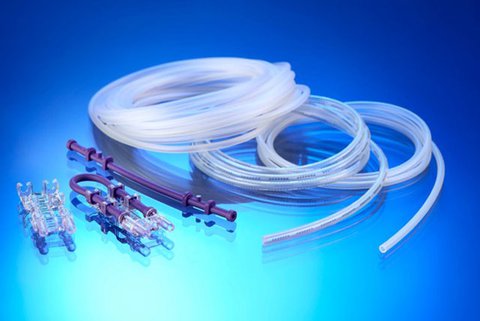
They are vitally important, make therapy possible, and they have become an integral part in hospitals or home-care settings: medication and feeding pumps supply patients with essential medication and nutrition.  It is not only the right electronic and mechanical components that are crucial factors, but also the choice of materials for the pump segment. As in so many other areas of medical engineering, silicone plays a prominent role here.
What properties must a product have in order to find a lasting place in the healthcare sector? What are the specifications? It must be biocompatible, and in many cases skin- and blood-compatible as well. Compatibility with common sterilisation processes is usually a key requirement. It should be resistant to heat and cold and display excellent storage stability while maintaining a consistent pump performance. It is also important that the product works reliably and provides precise pumping over long periods of time. For the use in hospitals and in the home-care domain this means always administering the right dose, whether with drugs or in feeding applications. Obviously, no substances should be released from the processed material. So-called ‘extractables’ can have a negative impact on drug formulations.
It all adds up to quite a long list of product-specific requirements, which must in turn be met by the chosen material and its processing methods.  
Silicone – an exceptional material
Silicone is a perfect fit for the requirements of precise dosing and integrity when in contact with medications. Its physical/mechanical properties and the high degree of chemical purity in its formulation are decisive factors in this respect.
Among its mechanical properties, the exceptional resilience of silicone plays a significant role. It has a direct influence on the tubing segment’s pump performance over the entire period of use. The developer can be sure that his pump will always precisely dose and deliver the prescribed and programmed quantity of medication or nutritional solution. To ensure this functionality, the pump segments are subjected to a qualification and validation process as part of the development phase. Upon customer request, each lot or batch manufactured can also be tested during the production phase. The segments are tested for their adherence to pump performance specifications on a custom-built test stand that has the corresponding production pump built in.
To ensure that medications maintain the greatest possible purity, platinum-cured silicone is often preferred over the use of a peroxide catalyst, due to its excellent extractables profile.
Silicone injection moulding vs extrusion
The pump segments available on today’s market are manufactured in two differently manufactured ways. In terms of ‘pure’ production costs for fixed lengths, extruded tubing is generally more economical. However, customer and product requirements with respect to improved precision in delivery rates are becoming ever more demanding. Injection-moulded variants are therefore beginning to draw increased attention. The reason for this is that the diameter tolerance of tubing segments (for both inside and outside diameter) can be reduced by almost half, depending on dimensions and geometry. This fact has a direct positive influence on the dosing accuracy of individual pump segments in the range of 1%. Combined with the development of the appropriate silicone material formulation, in terms of Shore hardness and the type and degree of crosslinking, extremely high dosing accuracies can be achieved for the pump system as a whole over the course of the product lifecycle.
Silicone injection moulding provides added value
The intelligent use of silicone injection moulding technology allows for a range of features to be integrated in a single part. Previously these had to be provided by a more complex component. The advantages include:
  • no component-internal assembly costs
  • · finishing work such as cutting and stamping processes are no longer necessary
  • · precision-shaped edges of the component--> no sharp corners
  • · material is highly particle-free
  • · very narrow tolerances --> very high dosing accuracy
  • · section for air bubble detection
  • · integrated connectors – poka-yoke principle
  • · high degree of design freedom
  • · improved anti-counterfeiting
  • · maximum patient safety
When it comes to pump segments, the extrusion and injection moulding approaches each have their advantages and disadvantages.
information source : https://www.medicalplasticsnews.com/news/material-gains_2/