2017年10月12日 星期四

Mowing parts mold

Mowing parts mold


  • 1 cavity Red Mowing Parts Mold
  • Mold Core and Cavity Made with Japan P20 mold steel
  • Parts Material: PC/ABS
  • Surface: High Polish
  • Suitable Molding machine size : 500T
  • Optimized mold tool water channel mold design with good cycle tim


Project development


Intertech Machinery is good at manufacturing plastic mold components used in industrial and packaging applications. Per customer’s demand, we will discuss the raw material required, the color master batch requires, mold making size required, molding machine size required, cycle time estimation, production time calculation report…etc with customers. After that, parts design service, mold engineering service, mass production arrangement, post assembly service or post machiningservice are also provided.
Each mold and molding projects case, we will see client specifications to serve the needs of a wide variety of industries. Our injection mold technology have D&B D-U-N-S compliant working system and meets high industry standards. We can mold anyplastic, metal and rubber projects for customers. We have advanced machinery equipment to provide small to larger mold projects and also manufacture thermoplastic, engineering plastics, silicone rubber and metal parts.

Highlight Points:

  • Our professional service includes engineering, mold making, prototyping and tooling
  • From single prototype to OEM and ODM high professional volume production, We can manage all our clients plastic injection molding requirements.
  • Except making mold, we also provide injection molding service, compression molding service (especial for silicone rubber material compounding with various colors matching and production job for specific product need) or punch die production service.
  • our injection mold testing machine available 50~250T in house, 300~3000T in associated party.
  • per each project need, we also design and provide fixture and jig making service for stabilizing some easy deformed parts need.
  • per customer’s need, we also provide chrome plated, painting, ultra-sonic welding, assembly or packing/printing service.
We provide low volume, pilot run of production job and mass production for customer.
Product Name
mold
Plastic Material
PP , PE , ABS , POM , PET, PBT, Nylon + GF…..etc. 
PC, PMMA Acraylic for transpartent product.
Steel of Cavity & Core
Up to customer’s budget and productivity required, 
we suggest the following steel grade: 
Pre- harden steel : P20 (1.2311), P20+Ni…etc 
Harfen Steel : H13 (1.2344) / NAK80…etc. 
Stainless steel : ASSAB Stavax…etc
Steel of Mold Base
Up to customer’s budget and requirement , we suggest different mold base steel to clients. Normal used material S50C, or P20
No. of Cavity
Customized
Hardness of Cavity & Core
Pre-Hardenss Steel : HRC 30~32+-1*
Heat Treatment Steel : HRC 50~52+-1*
Core pulling or Ejection system
Depends on the Products. 
Commonly used :Motor , oil cylinder, stripping plate, angel pin, ejector pin…etc
Mould Accessories
Compatible to DME/ HASCO Standard.
Cooling System
In Core : Baffle or By pass cooling 
In Cavity Plate: Chain drilling type colling
Surface Finish
Up to the prodct’s requirement, Normal used : Texture, EDM maching , Polishing
Mold Life
Up to mold steel grade, under ideal operation condition, 
1. Pre-harden steel, min. 20~300000 shots 
2. Harden / heat treatment steel : 60~800000 shots. 
3. Stainless steel : 1 million shots.
Runner
1. Cold runner 
2. Hot runner 
3.cold runner +hot runner
Delivery time
40~50 days , presenting T1 samples
Packing
Standard Wooden Case
Production
We can also provide Pilot Run production and molding production

Mold Order Process

Mold Shipping Process

For Mold Inquiry, Customer Must prepare:

  1. Product drawing with 2D(.dwg)and 3D (.igs, .stp…etc)?
  2. Advise product material (ex. Plastic ,rubber, silicone rubber or metal…etc )?
  3. Molding machine tonnage size and platen size?
  4. The cavity number of the mold that you want us to quote?
  5. Mold steel grade that you want us to quote?
  6. Hot runner or cold runner mold required?
  7. Mold gating inlet preferred?
  8. Mold ejection way preferred?
  9. Other related information required …(ex. Polishing , texture, engraving …etc)

For Molding Products Inquiry , customer must prepare:

  1. Products material required? (ex. Plastics, rubber , silicone , metal…etc)
  2. Products quality required in total?
  3. Delivery time required?
  4. Post machining or not information? (ex. Chromed plate.., painting …etc)
  5. Assembly or not information?
  6. Packing or not information?

Medical & pharmaceutical equipment mold

Medical & pharmaceutical equipment mold


Our customer's concept of products will
be brought out from design medical & pharmaceutical equipment molding to the discussion to its completion through our designers and engineers.


In recent years, Intertech gradually raises up our medical & pharmaceutical equipment molding design level to fulfill every customized molding equipment project. For examples, for fulfilling each customized medical & pharmaceutical equipment molding making project, when making those critical molds project, many kinds of slots, many kinds of material are needed in molding in one same mold or assemblied in one same mold. By doing this, we have to design the machining programming procedure with bigger capacity, plus, with high deep hole cavity machining capability and high stability procedure to accomplish this job. Eventually, such way will increase the medical & pharmaceutical equipment molding machining difficulty. However, Intertech can cooperate with customer’s requirement to adjust mold machining processing for satisfy each customer’s requirement.

Project development


Intertech Machinery is good at manufacturing plastic mold components used in industrial and packaging applications. Per customer’s demand, we will discuss the raw material required, the color master batch requires, mold making size required, molding machine size required, cycle time estimation, production time calculation report…etc with customers. After that, parts design service, mold engineering service, mass production arrangement, post assembly service or post machining service are also provided.
Each mold and molding projects case, we will see client specifications to serve the needs of a wide variety of industries. Our injection mold technology have D&B D-U-N-S compliant working system and meets high industry standards. We can mold any plastic, metal and rubber projects for customers. We have advanced machinery equipment to provide small to larger mold projects and also manufacture thermoplastic, engineering plastics, silicone rubber and metal parts.

For plastic mold design, …

1. The software we use includes Pro-Engineer, I-Deas, Cimetron, Auto-Cad & Solidworks.
2. Cutomer can send 2D, 3D, by .igs .stp, formats to us.
3. We can provide mold flow analysis service.
4. Mold design (with the best optimized mold water channel arrangement design and
the best cycle time performance consideration design)

In addition, CNC milled prototype, 3D printing prototype, prototype mold making service, fixture / jig making or welding horn design and making are available in Intertech with good experience !

We need 2D, 3D parts design to start our job, we can sign NDA (if needed)

For mold making:

When making mold project, per customer’s requirement for mold steel material, we choose the suitable mold steel grade for our customers.  We have high quality German and Japan imports mold steel material to proceed our mold project making. Then, the gating way will be discussed, the mold surface will be discussed, the mold cooling channel design will be checked, the operation style will be discussed, the molding machine size will be determined and the mold mechanism in actual production movement will all be checked as well.  Only after our mold engineers discussing with our customers for the mold engineering in detail, we will proceed with our mold making job. 

2017年10月6日 星期五

Trump NFL row: What have sports stars and team owners said?

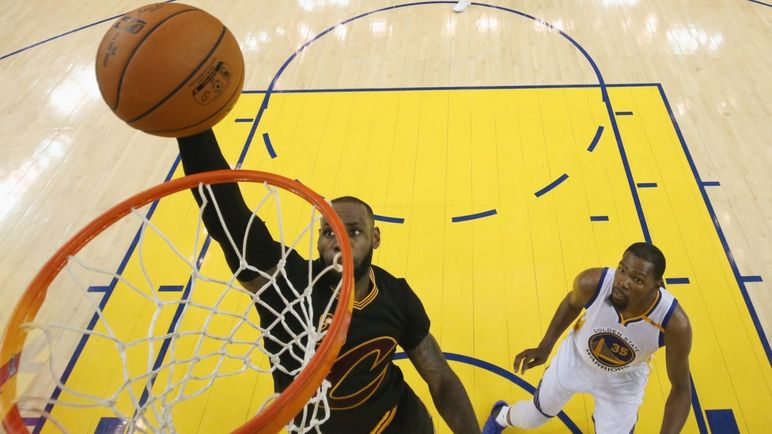
LeBron James #23 of the Cleveland Cavaliers dunks the ball ahead of Kevin Durant #35 of the Golden State Warriors in Game 5 of the 2017 NBA Finals at ORACLE Arena on June 12, 2017 in Oakland, California
US President Donald Trump is embroiled in a row with leading figures in the sports world after he said NFL players who protested during the playing of the national anthem should be fired.
The president also received flak for criticising NBA star Stephen Curry in a tweet for not wanting to visit the White House with his championship-winning basketball team.
But who has spoken out, and what have they said?
Warning: This article contains language some readers may find offensive.

The NFL

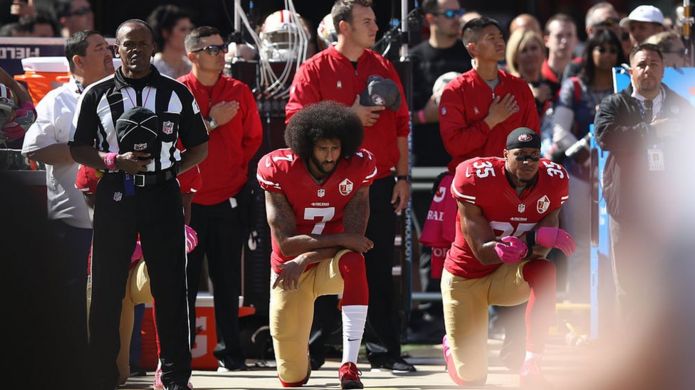
League representatives, team owners, players' representatives and of course players themselves have all spoken out since President Trump unleashed a tirade on American Football players kneeling during the national anthem in protest at police violence against African-Americans.
Former San Francisco 49ers quarterback Colin Kaepernick became a lightning rod for criticism when he did just that last year, with several players since following suit.
"Wouldn't you love to see one of these NFL owners, when somebody disrespects our flag, to say, 'Get that son of a bitch off the field right now... he is fired?" Mr Trump asked a rally in Alabama.
NFL commissioner Roger Goodell released a statement saying "divisive comments like these demonstrate an unfortunate lack of respect".
NFL Players' Association president Eric Winston said Mr Trump's comments were "a slap in the face to the civil rights heroes of the past and present".
Twitter post by @realDonaldTrump
Meanwhile, Mr Kaepernick's mother, Teresa Kaepernick, tweeted: "Guess that makes me a proud bitch."
Owner of the San Francisco 49ers Jed York called the president's comments "callous and offensive" and "contradictory to what this great country stands for".
New England Patriots CEO Robert Kraft, a man who has previously calledMr Trump a "very good friend" and donated $1m to his inauguration according to the New York Times, said he was "deeply disappointed by the tone of the comments".
Eric Reid #35 and Colin Kaepernick #7 of the San Francisco 49ers kneel in protest during the national anthem prior to their NFL game against the Tampa Bay Buccaneers at Levi's Stadium on October 23, 2016
He said he supported players' right to "peacefully affect social change and raise awareness in a manner that they feel is most impactful".
Baltimore Ravens owner Steve Bisciotti said his players had influence and that management respected and supported them "100 percent".
Minnesota Vikings player Bishop Sankey tweeted: "It's a shame and disgrace when you have the president of the US calling citizens of the country sons of a bitches."
The Seattle Seahawks' Doug Baldwin said he believed "this will be a unifying moment for the sports world". His teammate Michael Bennett, who has been sitting out the national anthem in protest, tweeted: "My mom is a beautiful lady she has never been a bitch."
Meanwhile, New York Giants owners John Mara and Steve Tisch said the president had been "inappropriate, offensive and divisive".

Atlanta Falcons owner Arthur Blank called for "constructive dialogue", while Miami Dolphins owner Stephen Ross said his players who kneeled for the anthem were "smart young men of character" who "wanted to start a conversation".
Twitter post by @AtlantaFalcons
Twitter post by @MiamiDolphins
While some sports fans have expressed support for Mr Trump, some sports stars and team owners who have backed Trump, such as New York Jets boss Woody Johnson - a Trump campaign donor who was appointed as his ambassador to the UK - appear to have stayed out of the row.
The NBA
Cleveland Cavaliers all-time leading scorer LeBron James, seen as one of the best US basketball players ever, was one of the first to respond to the president's attack on Stephen Curry, named the NBA's top performer in 2015.
Mr Trump had tweeted: "Going to the White House is considered a great honor for a championship team. Stephen Curry is hesitating, therefore invitation is withdrawn!"
In response, Le Bron James, who publicly supported Hillary Clinton in the 2016 election, called him a "bum". "Going to White House was an honour until you showed up," he said.
Curry told a press conference that his beliefs were "cemented even further about how things in our country are going" after Mr Trump's comments.
Kobe Bryant, formerly of the LA Lakers but now retired, also tweeted a response.
Twitter post by @kobebryant
Curry's team, the Golden State Warriors, said it was clear they were not invited to the White House but that the team would visit Washington DC on its own "to celebrate equality, diversity, and inclusion".
Head coach Steve Kerr said Mr Trump's comments about the NFL players were "as bad as anything he has said".
NBA Commissioner Adam Silver said he was disappointed the team would not be visiting the White House as it would have been a "rare opportunity for these players to share their views directly with the president" but that he was "proud" of players.
Twitter post by @NBA

Major League Baseball (MLB)

On Saturday night, the Oakland Athletics' Bruce Maxwell became the first Major League Baseball player to kneel in protest during the national anthem, mimicking the gesture of protest started by Colin Kaepernick.
His father is in the military and he was born on an army base, US media report. He told a reporter he was "kneeling for people that don't have a voice".
His team soon after said it supported its players' "constitutional rights and freedom of expression".
Twitter post by @Athletics
The MLB has also released a statement, according to ESPN reporter Buster Olney.
He quoted it as saying: "Major League Baseball has a longstanding tradition of honouring our nation prior to the start of our games. We also respect that each of our players is an individual with his own background, perspectives and opinions. We believe that our game will continue to bring our fans, their communities and our players together. 
information source:http://www.bbc.com/news/world-us-canada-41377115#

2017年10月2日 星期一

Life first emerged in ‘warm little ponds’ almost as old as the Earth itself

Life first emerged in ‘warm little ponds’ almost as old as the Earth itself


567041.bin


Life on Earth began up to 4.5 billion years ago as carbon-rich meteors bombarded the planet and leached the essential elements into “warm little ponds”, according to new research.
It was in this nutrient-rich broth that the first self-replicating molecules, with the first genetic code for life, were born.
While the idea we are descended from something that emerged in “warm little ponds” was suggested by Charles Darwin in the 19th century, it has been challenged by claims it all started around hydrothermal vents in the ocean.
But, in a new paper in the journal Proceedings of the Academy of Sciences (PNAS), researchers described how they had constructed a “comprehensive model” proving Darwin’s idea was plausible.
The earliest genetic material is believed to have been ribonucleic acid or RNA, which every human has along with DNA. While DNA is like the “blueprint” of a cell, the RNA is involved in translating this code into proteins and has a number of other tasks in regulating processes in cells, including growth, ageing and death.
In the PNAS paper, the scientists wrote: “One of the most fundamental questions in science is how life first emerged on Earth. 
“Given its ubiquity in living cells and its ability to both store genetic information and catalyse its own replication, RNA probably formed the basis of first life.”

They pointed to fossil evidence of life dated to more than 3.7 billion years ago.
“Thus the RNA world would have developed on a violent early Earth undergoing meteoritic bombardment,” the researchers wrote.
“At that time, the atmosphere was dominated by volcanic gases, and dry land was scarce as continents were rising out of the global ocean.”

Their model suggested the first RNA polymers “likely appeared before 4.17 billion years ago” and possibly as long ago as 4.5 billion years. Planet Earth itself is thought to be about 4.54 billion years old.
If life is truly as old as this, it suggests a number of things.
One is that simple life is likely to be common in the universe as it can survive in hostile conditions. At the time, the Earth was not shielded by a protective layer of ozone to filter out harmful ultraviolet rays from the Sun in addition to meteor bombardment.
But it also could be a sign that intelligent life takes a long time to develop and is therefore likely to be rare. The universe, at about 13.8 billion years, is only three times older than Earth.
The researchers drew on astrophysics, geology, chemistry, biology and other fields to develop their model of the creation of life.
One of the authors of the paper, Professor Ralph Pudritz, of McMaster University in Canada, said the evidence seemed to be pointing in one direction.
“Because there are so many inputs from so many different fields, it’s kind of amazing that it all hangs together,” he said.
“Each step led very naturally to the next. To have them all lead to a clear picture in the end is saying there’s something right about this.”
“We’re thrilled that we can put together a theoretical paper that combines all these threads, makes clear predictions and offers clear ideas that we can take to the laboratory.”
He said it seemed clear that RNA would have evolved before DNA.
“DNA is too complex to have been the first aspect of life to emerge,” Professor Pudritz said. “It had to start with something else, and that is RNA.”
Ben Pearce, a graduate student at McMaster who co-wrote the paper, said this was the first time all the evidence had been put into a model.
“No one’s actually run the calculation before. This is a pretty big beginning. It’s pretty exciting,” he said.
It is thought the first molecules replicated themselves – the most basic definition of life – by folding over and drawing in similar material from the environment. 
This simple process began the process of evolution as molecules that were better suited to their environment became more numerous and those that were not ‘died’ out.
Understanding this process, Mr Pearce said, was “the Holy Grail of experimental origins-of-life chemistry”.

sourced from :http://www.independent.co.uk/news/science

Nobel winners identified molecular ‘cogs’ in the biological clocks that control our circadian rhythms

Nobel winners identified molecular ‘cogs’ in the biological clocks that control our circadian rhythms


(The Conversation is an independent and nonprofit source of news, analysis and commentary from academic experts.)
Carrie L. Partch, University of California, Santa Cruz
(THE CONVERSATION) Circadian rhythms control when we’re at our peak performance physically and mentally each day, keeping our lives ticking in time with Earth’s day/night cycle. This year’s Nobel Prize in Physiology or Medicine was awarded to three American scientists, Jeffrey Hall and Michael Rosbash of Brandeis University and Michael Young of Rockefeller University, for shedding light on how time is measured each day in biological systems, including our own bodies.
From Darwin’s finches on the Galápagos Islands to modern city dwellers, organisms adapt to their environment. Regular 24-hour cycles of day and night on Earth led to the evolution of biological clocks that reside within our cells. These clocks help us unconsciously pick the best time to rest, search for food, or anticipate danger or predation.
The field of modern circadian biology got its start in the 1970s, when geneticist Seymour Benzer and his student Ron Konopka undertook a revolutionary study to track down the genes that encode biological timing in fruit flies. With that gene in their sights, the labs of Hall, Rosbash and Young ushered in the molecular era of circadian biology as they untangled the molecular mechanisms of biological timekeeping.
To get started, Benzer and Konopka performed a simple experiment: tracking when the fruit fly Drosophila melanogaster would emerge from its pupal case. This developmental process, called eclosion, served as a powerful tool to study the complicated biological process of circadian rhythms. Because Drosophila pupae only emerge at a specific time of the day, Konopka could measure the timing between rounds of eclosion for different strains of flies and identify those that had a bad clock. By isolating fly strains with timing problems, they hoped to be able to zero in on the relevant genes that controlled this internal clock.
In the end, Konopka found three mutant strains: one that had a short, 19-hour day, one with a long, 28-hour day, and one mutant that appeared to have no clock at all. Using genetic tools, he was able to show that each of the responsible mutations lay remarkably close on the same chromosome, suggesting that they were all located within a single gene, which Benzer and Konopka named period for its apparent control over clock timing.
Then the race was on and in 1984, two teams finally identified this so-called clock gene period in flies: the labs of Jeffrey Hall and Michael Rosbash working in close collaboration at Brandeis, and Michael Young’s lab at Rockefeller.
With the gene in hand, these groups then aimed to figure out how period fit into a biological clock. The first clue came when Jeffrey Hall and Michael Rosbash discovered that the protein encoded by this gene (called PER) increased during the night and decreased during the day, suggesting that levels of the protein might somehow communicate time information to the rest of the cell.
If you just imagine how a biological clock might best keep track of time over a day, you might jump to a mental picture of an hourglass timer. Sand gradually disappears over time; when all the sand is gone, it could signal the process to begin again. Was PER the substance that kept biological time by gradually changing throughout the day?
One key insight came when Hall and Rosbash reasoned that this PER protein might actually block the activity of the period gene, turning itself off each day. As levels of PER build up over the course of the night, less and less new PER protein would be made. Eventually the protein levels drop and the process starts over again. This is called a negative feedback loop. It’s the same type of biological balancing act that keeps everything from your blood sugar levels to your circadian rhythms in line throughout your body.
This kind of negative feedback system is similar to how a thermostat controls the temperature of a room. If the temperature drops below the set point, the thermostat turns on the heater. When the room gets too toasty, the thermostat turns off the furnace. Here, negative feedback – a build up of heat – works to control the heater and maintain a constant temperature.
Now imagine having to repeat this process over and over each day with nearly exact timing. Biological clocks use negative feedback from clock proteins like period to turn themselves on and off again each 24 hours. Additional studies in the Young lab identified other key genes – dubbed Timeless and Double-Time – that fit into this puzzle by controlling how PER travels around the cell to turn itself off each day.
Work over the last two decades has rounded out a much deeper understanding of circadian rhythms to show how most organisms have clocks based on feedback loops similar to Drosophila. Rosbash’s lab identified part of the PER protein known as the PAS domains that we now find in many clock proteins from fungi and plants to humans. PAS domains help clock proteins like PER pair up with their partners to control the negative feedback loop.
By comparing differences in the structures of PER PAS domains of Drosophila and mice, scientists are now beginning to learn how the protein “cogs” of the molecular clock fit together to tell time. Understanding circadian rhythms at atomic resolution like this allows us to explain how newly identified mutations in PER lead to changes in clock timing and open the door to therapeutics that could harness the power of circadian rhythms to improve human health.
We now have a much greater appreciation for the central role that circadian rhythms play in coordinating our lives with Earth’s day, controlling everything from your metabolism to the timing of sleep. Young’s lab recently identified a prevalent mutation in a human clock gene, cryptochrome 1, that lengthens the cellular clock and makes it difficult to get to bed before midnight. This inherited “night owl” gene is estimated to be pretty common, found in nearly 1 out of 75 of us.
Understanding the powerful regulation of biology by circadian rhythms is beginning to lead to far-reaching changes in policy. For example, rather than arbitrarily force our sleep schedules into routines that require early morning wake times, some researchers are showing that adjusting our schedules to fit our natural rhythms may pay off at work and school. This is particularly true for adolescents, who have a natural “night owl” tendancy – delaying school start times by even just one hour can significantly improve academic performance.
The science is now far enough along in our understanding of circadian clocks that researchers are working to optimize work and sleep schedules with our biology in mind. And all these policy innovations are built on the foundation of the Nobel-winning research with those tiny fruit flies.
This article was originally published on The Conversation. Read the original article here: http://theconversation.com/nobel-winners-identified-molecular-cogs-in-the-biological-clocks-that-control-our-circadian-rhythms-85061.